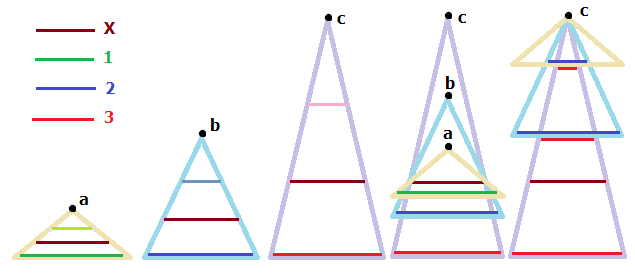
In that wiki article, there's no references/proof that the absolute angular size is more important. On the contrary, it talks more about the relative angular sizes.
At least you acknowledged that the relative sizes are somewhat important, which is different from your original statement where you claimed that the compression doesn't depend on the physical distances at all:
Now about your earlier thread on telephoto compression - your examples are based on "shoot from a long distance, view at a close distance", so again the physical shooting distance directly affects the result.
But you claim that the viewing distance is everything, and I think you need a stronger evidence to support that claim.
At least I don't really see the compression effect fading away as I move an image away from my eyes. It could depend on the type of the scene and visual references in the image that help estimate the relative and actual sizes.
Also I find inconsistent your definition that the compression starts when the lens is > 43mm. How does it align with the claim that the compression depends on the viewing distance?