Showing the Unspeakable
Whilst in Poland in April we visited Auschwitz. I had seen and read so much about it over the years, that I thought I knew what to expect, but in fact it was more powerful and sinister than I expected. It was difficult to take it all in and there were so many contrasting emotions. It was a warm, sunny Spring day, and the birds singing and the first flowers looking pretty created a cheery atmosphere, but the whole time I was also feeling its dark and evil history. Seeing tourists like me who would be leaving again in a few hours, compared to those 80 years ago who couldn't leave. Wondering whether we were doing the place justice and trying to learn and feel, or were we guilty of adding a tick on a long list of tourist to-dos.
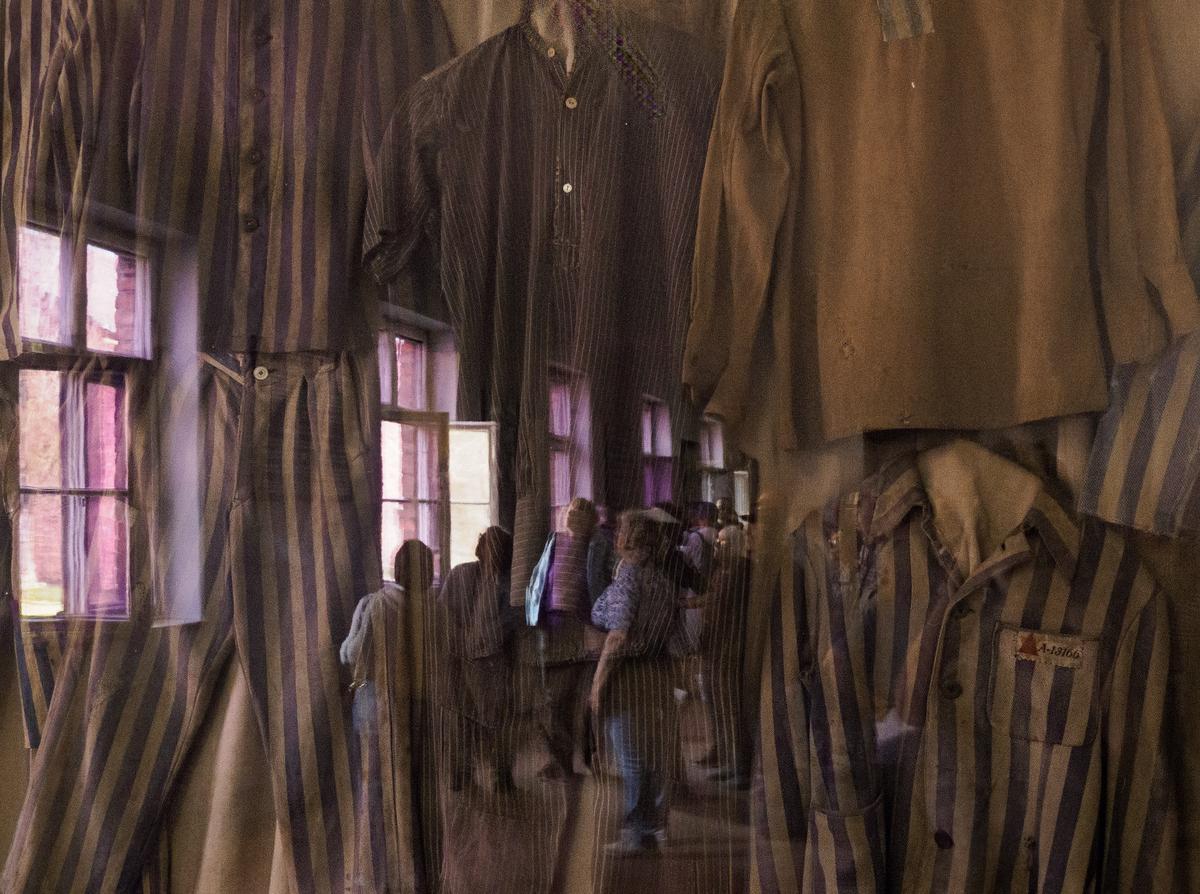
It was difficult to capture all these thoughts photographically. There are so many iconic scenes that I have seen a thousand times and trying to see them in a new way is difficult / impossible. Trying to bring across the sinister nature on a bright sunny day is tricky too. (I went to Buchenwald on an icy, foggy day, so it was easy there.) Avoiding visitors in the frame was not easy, I wanted to show them, without them looking like casual visitors. I wanted the ghosts of Auschwitz to inhabit the place as well as the visitors and tried to do this by including historic photos on the walls, or as in this example, by using reflections to suggest ghosts.
Of all the photos I took, I think this one was the most successful at conveying the feelings I wanted to illustrate, but suggestions are welcome.
On a technical note:
In both this week's and last week's photo, I made use of the new remove reflections feature in Lightroom, which allows the reflection to be removed completely, and then use a slider to bring back the level of reflection as required. Sometimes the removal works like magic, sometimes some or all of the reflection remains untouched, but if you intend to return some of the reflection, it is not so important how successful the removal was.