The crypt looks good.
Those carved capitals put me in mind of some kind of pastry, or maybe a meringue?

May 10, 2025
41
-

-
Love these kind of shots 😁
Maybe remove the distortion visible down the left hand side? -
-

This is SOOC. I took it when the camera's digital converter was 80mm; it is still nearly a 9MB file. I kind of liked the camera but not enough to keep it, so I will sell it. It offers very little over my Leica Q2 and lacks many features like OIS and a faster lens. If anyone is planning to buy the GFX100RF, can contact me 😎
-

Good contrast between the two buildings. I presume you were on a boat. I also like the way the apartment block juts out of a forest.
-
Good timing in both these shots. I presume these are two old Soviet planes, even though onee is monikered Red Bull instead of having a red star.
D90, what a classic camera. I jumped from the D70 to the D300, but these cameras seemed brilliant back then.
-
Love the abstract effect of this shot. Maybe a tighter crop to remove the dark sides?
-
Loved this set, with all that dated stuff on display, as well as the "characters" at the event.
I was pretty amazed to see that the film OM2 was about the same size as the new OM3. My old EM5 seemed pretty small compared to an old Nikon FM2 I have up in the loft.
-
Simple but restful.
-
Nice atmosphere in this.
-
Tons of detail and a good comp. But I'm not planning...
-
A really nice semi abstract here.
I have wondered about Medium Format, and old bodies are getting cheaper SH. But then adding in a new set of lenses, would be too costly. For my photography HDR probably makes up for the small quality difference between my Z8 an MF.
-

Interesting contrast between buildings. With my limited knowledge of languages from roman origin it seems like classy building is military high school, does it mean that this apartment building is related to it, being dormitory or something like that?
-
Interesting image, I guess the face below feet is depicting Adam? Usually scull seems to be used there.
-
Thanks.
It seems to me that film cameras are quite cheap nowadays compared to what film and its processing costs. Here roll of BW film goes about 10€, processing and scanning adds another 10, so few rolls of film and it comes more expensive than camera itself. With digital cameras it's opposite: initial price is high but after that you have basically unlimited shooting possibility. -
Yes, OM-3 is quite hefty camera, considerably more than OM-5 (and E-M5, I presume), it's even wider than OM-1 and about same height, on other hand film OM cameras were quite compact so that's where OM-3 meets them. But if I look at bottom of camera then it seems like third of inner volume is occupied by big BLX battery, so it's quite feat to put all the electronics, sensor and shutter into remaining space.
-

An Evening On The Moors
Well, technically, two evenings on the moors as the sunset shot at the end was taken earlier in the week. That one aside, these shots are from an evening wander on Anglezarke Moor in search of the Anglezarke Moor standing stone, a potentially ancient artefact I've only recently heard about. It didn't look like it would be a particularly tough hike to reach it, so I decided to bring the Z8 along with both the 24-70 f/2.8 and 70-180 f/2.8.
All images taken handheld and processed from single raw files in Capture One Pro 23.
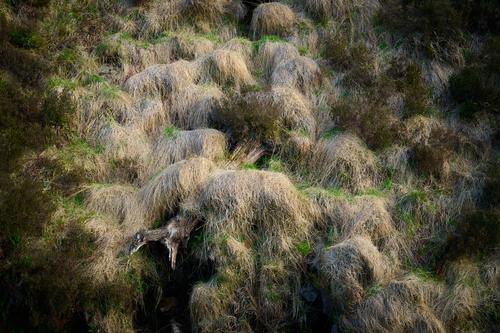
Partially Digested
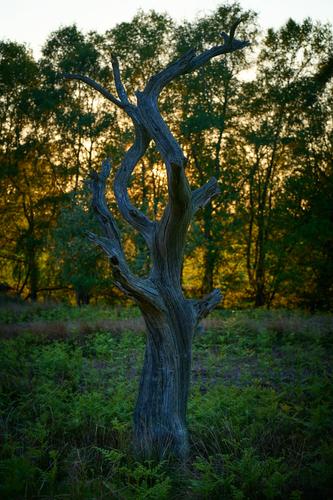
A long dead tree being swallowed by the grass on the far bank of Black Brook. I take a shot of this every time I pass it. At some point, I'll have to gather them together to see if there's any obvious signs of its gradual disintegration.
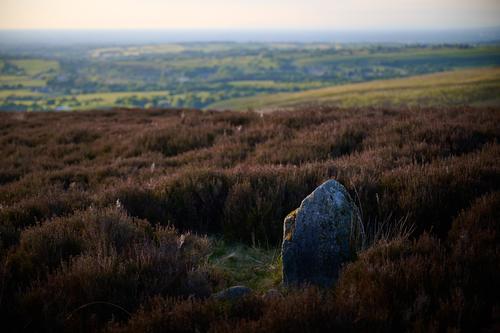
Stoned
The standing stone. It's technically, not a long or steep walk to reach this from White Coppice (the entire loop was just 2.74 miles, with a mere 541ft of ascent), but it lurks amidst a pathless sea of heather (definitely not the lucky variety if you're unfortunate enough to find yourself wading through it) which made it a bit more challenging to reach than I expected, requiring many stops
to catch my breathfor photography. This view is looking North West towards the coast.The Micro Megalith
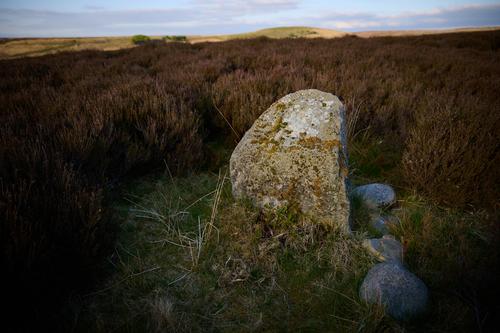
A closer view, looking North East towards Great Hill. Not much is known about the stone or its origins. It stands about two feet high above the surrounding ground on the Northern flank of Hurst Hill, reminiscent of Spinal Tap's Stonehenge set in its diminutive stature, but it is suggested that it may have at one time been much taller (3ft?). Given the presence of various recognised Bronze age artefacts on these moors (Round Loaf and Pikestones are both nearby - one of the shots I took that evening includes the former in the background, but there's nothing remotely impressive about that image unfortunately) it's tempting to think it was put in place at a similar time, but it's also possibly the remains of a way marker from more recent times.
White Coppice
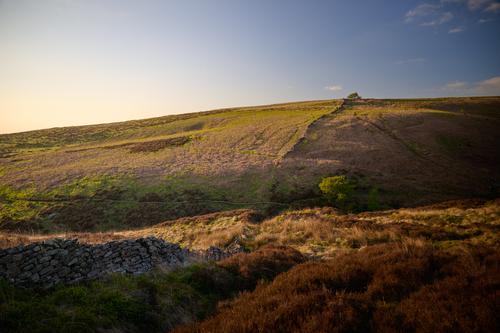
Heading back down towards Black Brook via a much more civilised path, well, just a path, but it felt like luxury after wading through all that Heather. The tree at the top of the hill marks the former site of Coppice Stile House, a familiar sight for hikers following the path that winds its way to the top of White Coppice, while the wall marks the boundary where Heapey Moor begins.
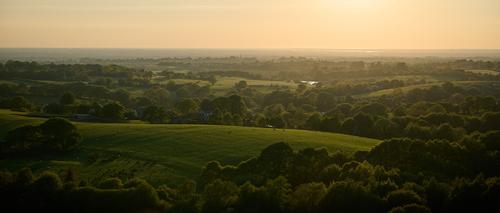
The Onset of Sunset
Looking towards Chorley North from the top of Black Coppice. An X-Pan crop seemed a bit tight here and I'm not a fan of 16:9 in general, but going cinemascope (2.35:1) seemed to work quite well in this instance.
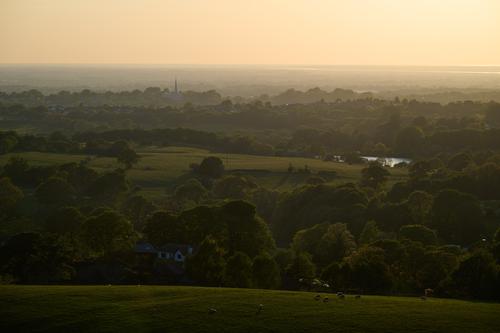
Distant Dreaminess
Looking deeper into the view from Black Coppice. One of the nice things about this time in the evening is the mist that gradually forms across the distant fields and marshy flat ground leading out to the coast. At least the Irish Sea PermaFog™ seemed to be having the night off on this occasion.
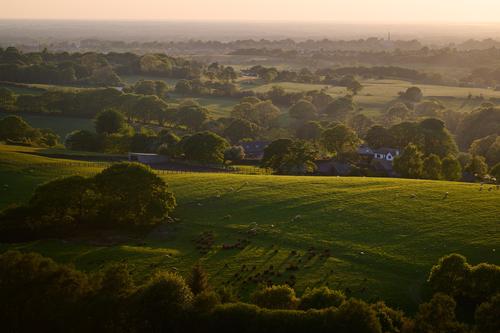
Stretching Shadows
Looking closer to the front of the view, the growing shadows, gradually stretching across the field in the foreground caught my eye.
Dead and Dancing
A long dead tree beside the path on the way back to White Coppice. Despite its distant demise, it looks like it's having quite a good time dancing in the disco lights provided by the setting sun.
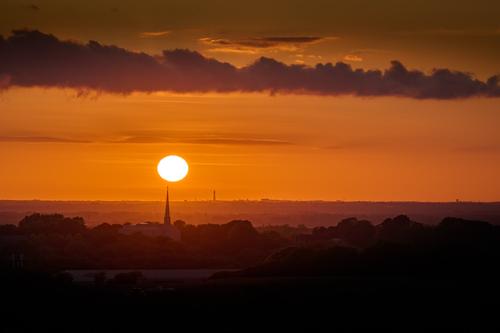
Sunset from Healey Nab. I wasn't expecting much from sunset on this particular evening, the sky was virtually cloud free when I set out, which typically leads to a pretty bland sunset as there's nothing to catch the colour. However, I was lucky to find a couple of interesting banks of cloud just above the setting sun to break up the monotony. The tower in the foreground is the Mormon Temple at Chorley North. The smaller one on the horizon is Blackpool Tower.
-
The trees here are a chaotic jumble, but this works quite nicely as an image, with the sunstar being an added bonus.