Thank you very much for your feedback
The CommuniCam was the forerunner of smartphones, which did so much harm to the photographic industry! 🤓

March 28, 2023
153
-
-
Agfa ePHOTO 307 (1996)
310,000 pixels (640x480)
The First Consumer Digital Agfa
2mb Internal
With a more classic shape
Agfa ePHOTO 307 (1996) by Marc Aubry, sur FlickrAgfa ePHOTO 307 (1996) and the Compaq 5100 / 90 mhz (1995)
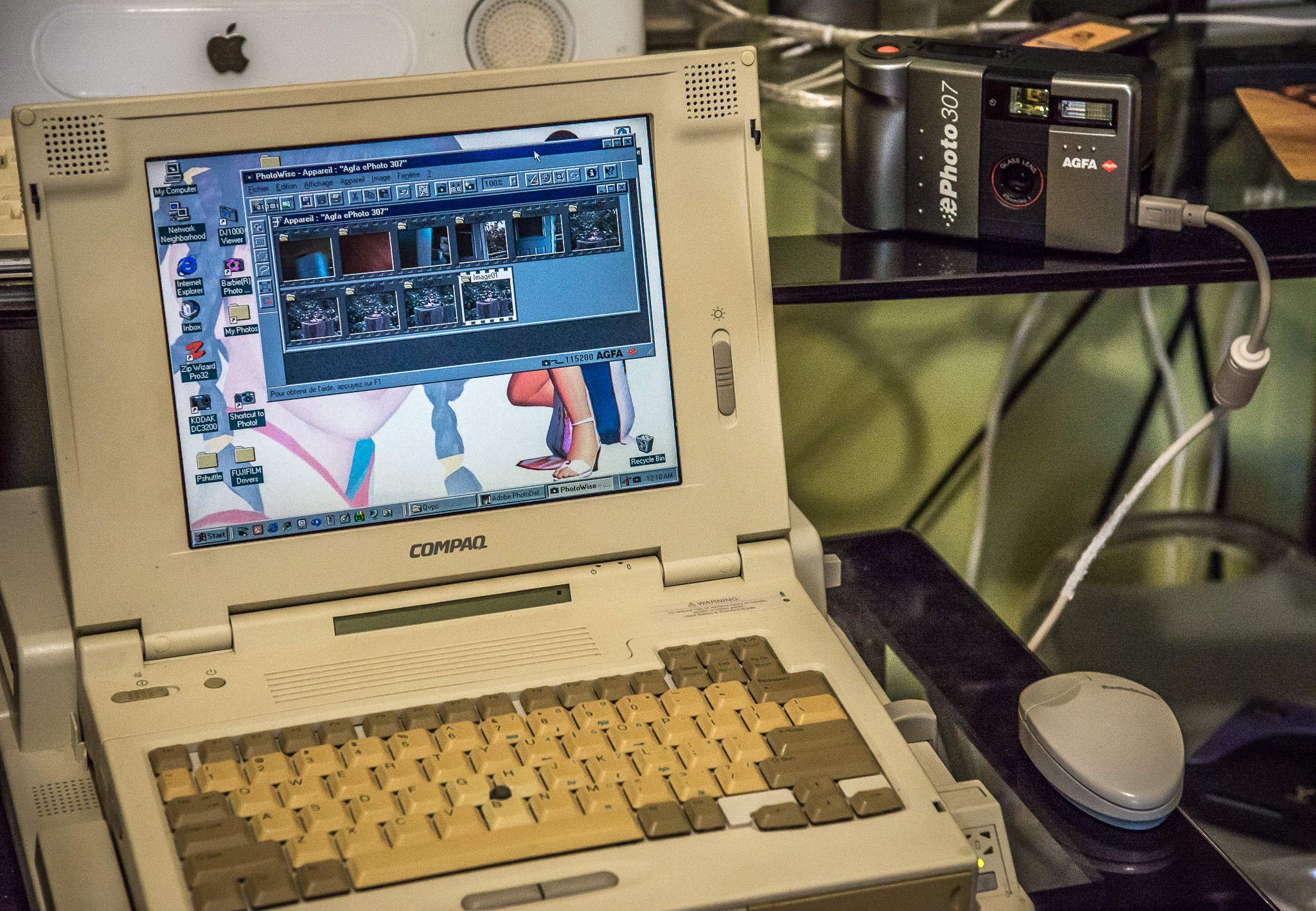
Agfa ePHOTO 307 (1996) by Marc Aubry, sur FlickrHere, the interface of AGFA Photo Vise, the software for downloading photos from the ePhoto 307 camera under Windows 95 Unable to import photos with another software.
The Agfa ePHOTO 307 had one of the worst compression algorithms of its time
Here is an 800% crop of the photo, to clearly see the groupings of pixels in groups of 64 (8x8)
Agfa ePHOTO 307 (1996) by Marc Aubry, sur Flickr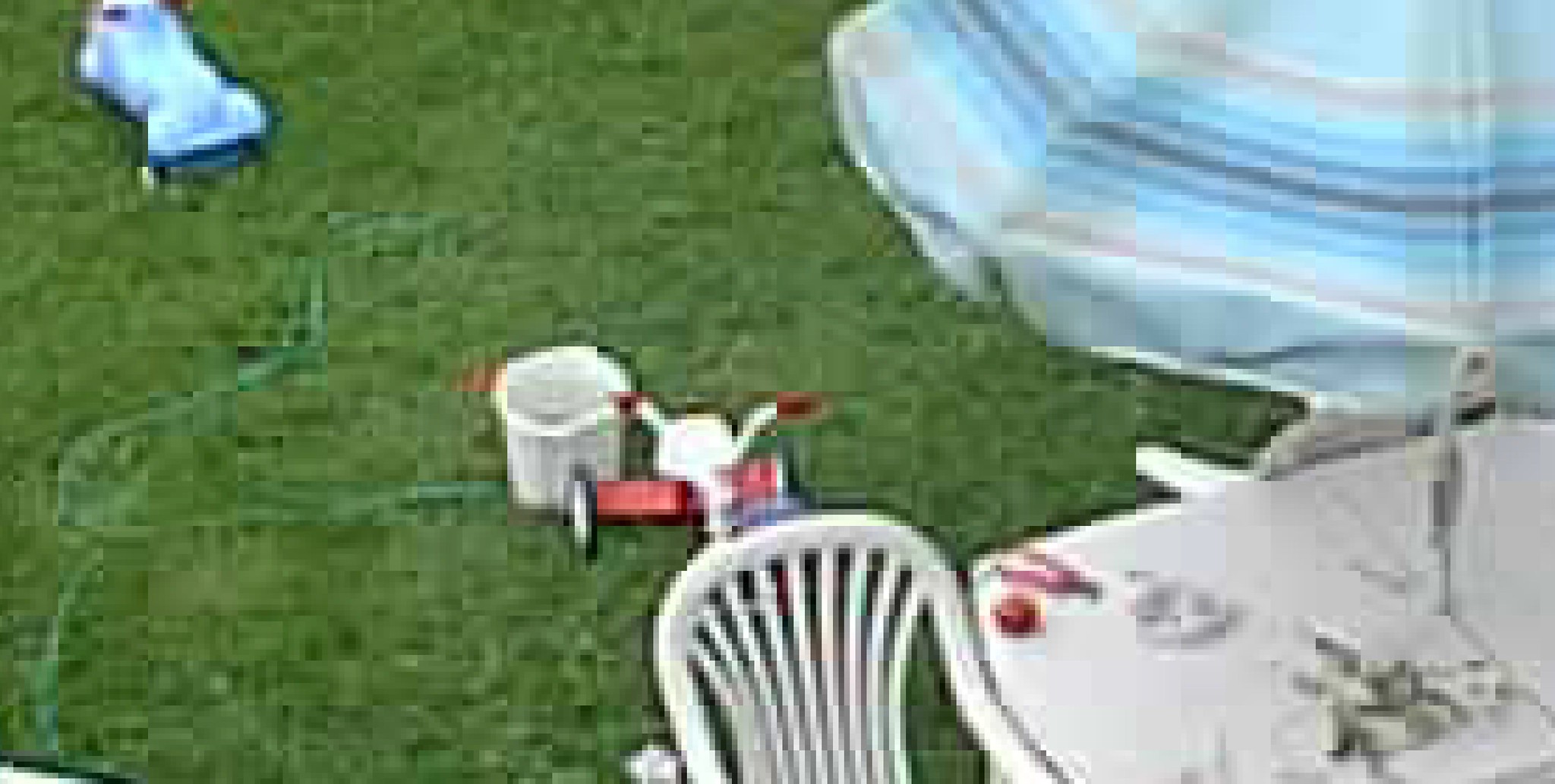
Agfa ePHOTO 307 (crop800%) by Marc Aubry, sur Flick -

Hi,
The real beginning of the smartphone was the PDA phone. Ericsson had a project with Palm for one, then Palm tanked and we wound up trying to peddle it ourselves. I still have a couple prototypes of that around.
I don't recall that one having a camera though.
Stan
-
In the beginning, it was not uncommon to see the same camera, under different names.
Like here with a Sanyo and an Epson

Sanyo_Epson by Marc Aubry, sur FlickrEpson PhotoPC (1996)
Epson's first digital camera!
310,000 pixels (640x480) with 1mb Internal
Storage 1MB Int.Sanyo VPC-G1 (1996)
Sanyo’s first digital camera!
310,000 pixels (640x480) with 1mb Internal
Storage 1MB Int. -

Hi Marc
I’m really enjoying this thread and I just want to offer you some encouragement to keep going with it. One thing that occurs to me is a sense of disappointment that, after all the innovative shapes of these cameras, we have now pretty much ended up with digital cameras which look like SLRs despite the shape (with pentaprism housing) no longer being necessary.
-
Thank you very much it is very nice. 👍🏻
I can only agree with you on this point. And it's particularly discouraging to see all these MLs, which stupidly imitate the SLRs of another era. 🤡 -
SEGA Digio SJ-1 (1996)
A funny camera

SEGA DIGIO (1996) by Marc Aubry, sur FlickrSEGA Digio SJ-1 (1996)
0.25MP 1/5’’ sensor (320x240)
Storage: SmartMedia 5v 0.5mp
¥29,800 ($300.00)It uses the smallest memory card ever made for a camera (in storage capacity)
A SmartMedia of 0.5 MB
SEGA Digio SJ-1 (1996) by Marc Aubry, sur FlickrDevice sold in Japan and Australia only !!
I have the impression that it is impossible to download the photos taken with the SEGA
We must be forced to use the game console of the same name, to achieve this!
I have never seen a single software for PCIf someone can explain to me how to download the photographs taken with my SEGA Digio SJ-1
-

They don't all look like SLRs.
Don
-
To be fair, he didn’t say that - and then there are the Sony NEXes and A6000s (? - I don’t follow Sony hardware) which pack an amazing amount of functionality into a very small package. There are many that don’t, but all the major manufacturers have followed the SLR design for most of their range. I rather liked the look of the designs where the lens assembly was in a separate swivelling module, though I never had chance to try one.
-
Epson PhotoPC
Epson was also very active in the early years.
Epson PhotoPC 600 (1997)
Epson PhotoPC 500 (1996)
Epson PhotoPC (1996)
Epson PhotoPC by Marc Aubry, sur Flickr
Epson PhotoPC by Marc Aubry, sur FlickrEpson PhotoPC (1996)
Epson's first digital camera!
310,000 pixels (640x480) with 1mb Internal
$1000.00Epson PhotoPC 500 (1996)
310,000-pixels sensor (640x480)
Storage: 2 MB Int.
$700.00Epson PhotoPC 600 (1997)
810,000-pixels sensor (1024x768)
Storage: 2MB CompactFlash
$850.00And that brings us to the year 1997 …
-
1997
We finally change the year 😎
HP Photosmart (1997)
310,000 pixels (640x480)
HP Memory cards 2mb Internal
The First HEWLETT PACKARD
$500.00 USD
HP PhotoSmart (1997) by Marc Aubry, sur Flickr
HP PhotoSmart (1997) by Marc Aubry, sur Flickr -
The Kodak DC120 Digital Zoom Camera (1997)
820,000 pixels sensor (964x850) with Int. (1280x960)
Storage: 2 MB Int. & CompactFlash
$999.00 USDA camera that many people here must know. It is an improved version of the DC50

Kodak DC120 Digital Camera zoom (1997) by Marc Aubry, sur Flickr
Kodak DC120 Digital Camera zoom (1997) by Marc Aubry, sur FlickrKodak DC120 Digital Camera zoom (1997)
eMac 800 mhz HD 40GB 17" Flat CRT (2002)
Sofware Transfert d'images KODAK
Kodak DC120 (1997) & eMac 800 mhz HD 40GB by Marc Aubry, sur Flickr
Kodak DC120 (1997) by Marc Aubry, sur Flickr
Kodak DC120 (1997) by Marc Aubry, sur Flickr -
I can’t restrain myself any longer - just how many vintage cameras have you got? How do you store them, deal with battery problems etc.?
-
About 200, only the cameras that made history, in my eyes of course 😎
Let me answer in more detail in a few days as a conclusion and/or start of a new thread on early DSLRs/MLs👍🏻
-
And now the little PowerShot 350 from Canon

Canon PowerShot 350 (1997) by Marc Aubry, sur FlickrCanon PowerShot 350 (1997)
310,000 pixels sensor (640x480)
Storage: 2MB CompactFlash
$700USD
Canon PowerShot 350 (1997) by Marc Aubry, sur FlickrAn example of the confusion between who does what! ⁉️

Canon / Konica / Panasonic by Marc Aubry, sur Flickr -
Sony's second camera

Sony DSC-F1 (1997) by Marc Aubry, sur FlickrSony DSC-F1 (1997)
310,000 pixels sensor (640x480)
Storage: 4mb Internal $850 USDAnother device with internal memory
No memory card, we have to connect the device to a Mac or a PC :(
This is borderline unacceptable in 1997!!
Sony DSC-F1 (1997) by Marc Aubry, sur FlickrHere is a Mac PowerBook G3 with Mac OS 8.6 and Photoshop 6.0 and a Sony Digital Still Camera utility 1.5a plugin

Sony DSC-F1 (1997) by Marc Aubry, sur FlickrIt's always a small victory! to get fifteen or more years old software working again to be able to recover the trapped photos 😎
-
Something strikes me as interesting about many of the cameras displayed above: the frequent attempt to forge a new shape for the camera. And yet, 20 or so year later, the Canon EOS R series, for instance, employs the same basic shape as the analog EOS series did, even though there is now no film to move from spool to spool!
David
-
Ridicule does not kill 😈
Once again, this demonstrates that old habits are hard to change. 😂
