• Members 240 posts
    May 11, 2023, 7:23 p.m.

    Sony A9II. I have mine set to aperture rear command dial, shutter front command dial. The EC dial is directly to the right of the rear command dial.

    I'm in M mode, auto ISO, no upper limit set.

    I shoot Raw. I use Zebras. I set the Zebras to "custom 109+"

    My ONLY concern initially is setting shutter speed (slowest I can get away with for my motion blur requirements) and aperture (brightest I can get away with for sufficient dof).

    My goal is to NAIL THE DECISIVE MOMENT!

    I can then alter shutter, aperture or EC with my thumb and forefinger without taking my eye off the EVF, dialling in my settings as the shoot and/or lighting evolves.

    The zebras will give me an indication if I can improve raw file quality by altering my parameters on the fly without taking my eye off the EVF.

    For example, a simple one stop +EV will half my ISO. Or I can slow my shutter, or open my aperture. (The latter two options being the ones that put more light on the sensor). But halfing my ISO will give me a bit more DR in post.

    BUT, that's IF time allows and it doesnt detract from the primary goal of NAILING THE SHOT.

    Now, if anyone has a better way of doing it, for fast moving dynamic situations in the dark without missing a decisive moment then I'm all ears.

    Scientific best practice is great, nailing the shot is even more important for me (and especially for my clients).

  • Members 514 posts
    May 11, 2023, 7:27 p.m.

    Well, I'm not going to dispute with Iliah, but I'll try and explain why I said that.

    Assuming the goal is ETTR at base ISO. If I don't have enough light to achieve that, I can resort to raising the ISO. But we know that doing that doesn't magically make the sensor more sensitive. In effect, what it does is underexpose compared to an ideal ETTR exposure and then lie to you to make you feel good about it.

  • Members 514 posts
    May 11, 2023, 7:32 p.m.

    Perhaps you are an expert in the correct terminology and fussy about it. I'm not, and like most people I use it loosely and inconsistently because I have a list of about 5 synonyms for these words and they all mean the same thing to me. If we are going to communicate using a standardised language to avoid muddle, that is good but I suggest we need to set out those terms as a glossary. You can't just assume that your correspondent is familiar with physics and engineering language. Most of us are photographers who know little of engineering. Be more tolerant.

    Correct exposure in my world is ETTR. Any exposure that is less than ETTR is underexposure. Using an exposure that is less than ETTR results in increased noise and reduced DR compared to ETTR. Increasing ISO in order to try and ETTR is just lying to yourself.

    Now, you have said several times that I have a mental model that I won't let go of. Why don't you set out what your perception of my mental model is and we can decide whether it is my concepts that are fault or if I'm just careless with words,

  • Members 240 posts
    May 11, 2023, 7:39 p.m.

    I think after several hundred posts on ETTR at base ISO across several threads at this place plus thousands at the other place I think we ALL get that.

    Now we are discussing a tiny little aspect that some folk may find vaguely useful - Namely, relating it all back to actual real world photography and best practices based on real world genres shot.....

  • Members 83 posts
    May 11, 2023, 7:44 p.m.

    Thanks @JimKasson for the information at LensRentals. Well done.

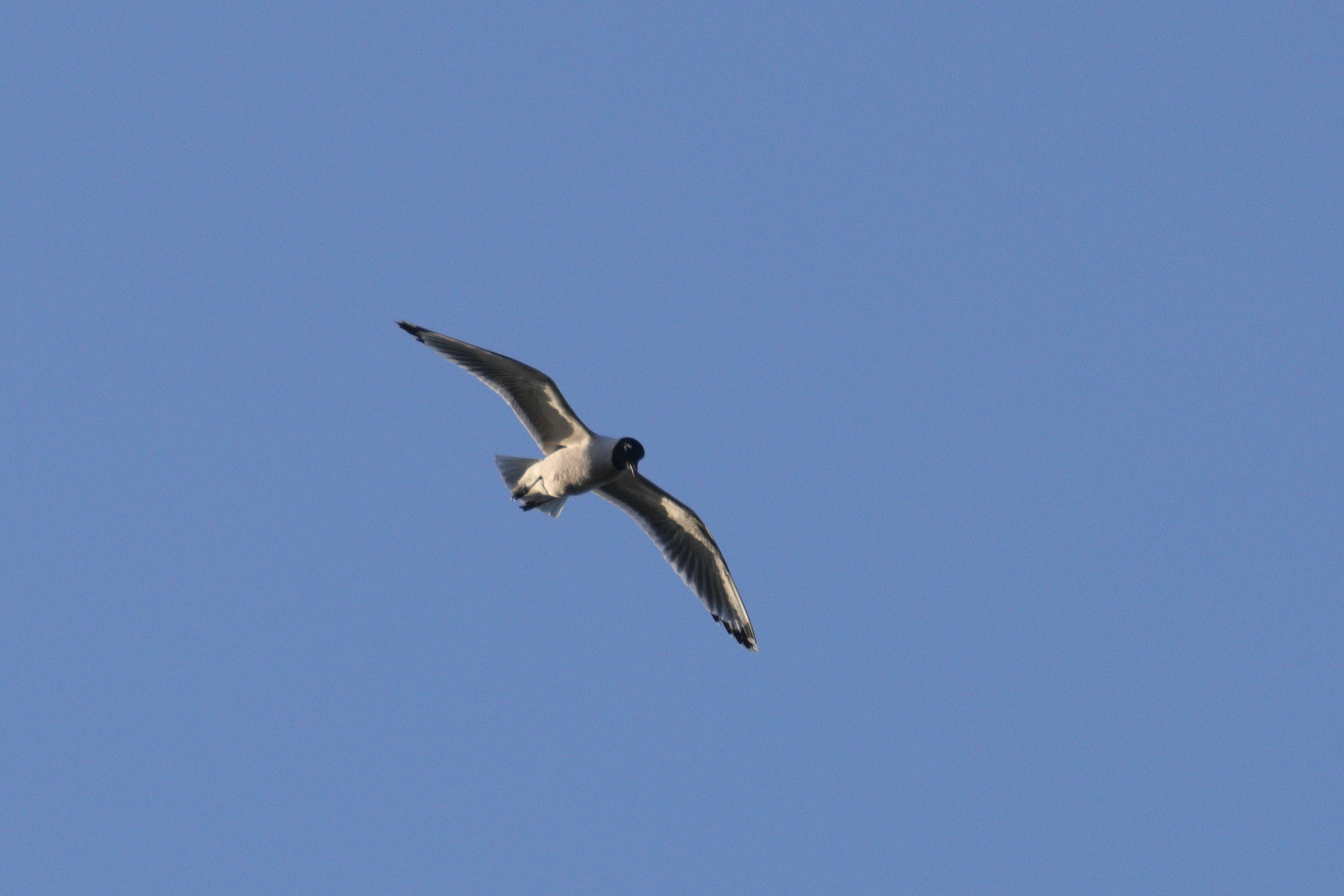
    One thing I am still a little puzzled about is how the gamma curve (or curves) impact the values near clipping and how this might be predicted from a raw histogram. A Franklin's Gull was flying over my house when my camera was ready for a perched bird and I am old and slow. When I make what Canon DPP calls "gamma" adjustments, the shape of the curve changes, the input limits change (but less than is possible with rawtherapee), and the toe and shoulder of the curve cause levels to be stretched or compressed.

    (some command lines executed on my Debian machine and some on my iMac)

    image.png histogram in Canon DPP with cursor over pixel that has red value of 255.

    image.png histogram produced by
    /home/jrm/src/libraw2021dec18/LibRaw-master/bin/dcraw_emu -v -T -6 IMG_4055.CR3
    and
    /opt/local/bin/gmic IMG_4055.CR3.tiff keep[0] display_histogram 800,600,65536,0,65535,0,"cut(i,0,65535)" normalize[-1] 0,255 output[-1] IMG_4055a_hist.png ; echo "gmic histogram"
    [gmic]-0./ Start G'MIC interpreter.
    [gmic]-0./ Input all frames of TIFF file 'IMG_4055.CR3.tiff' at position 0 (1 image 8191x5463x1x3).
    [gmic]-1./ Keep image [0] (1 image left).
    [gmic]-1./ Render 800x600 channel-by-channel histogram of image [0], with 65536 clusters, minimum value 0 and maximum value 65535.
    [gmic]-1./ Normalize image [0] in range [0,255], with constant-case ratio 0.
    [gmic]-1./ Output image [0] as png file 'IMG_4055a_hist.png' (1 image 800x600x1x3).
    [gmic]-1./ End G'MIC interpreter.
    gmic histogram

    image.png histogram produced by changing the input range in Canon DPP to +2.00 and exporting 16 bit tiff and
    /opt/local/bin/gmic IMG_4055h.TIF keep[0] display_histogram 800,600,65536,0,65535,0,"cut(i,0,65535)" normalize[-1] 0,255 output[-1] IMG_4055h_hist.ppng ; echo "gmic histogram"
    [gmic]-0./ Start G'MIC interpreter.
    [gmic]-0./ Input all frames of TIFF file 'IMG_4055h.TIF' at position 0 (2 images [0] = 8192x5464x1x3, [1] = 252x168x1x3).
    [gmic]-2./ Keep image [0] (1 image left).
    [gmic]-1./ Render 800x600 channel-by-channel histogram of image [0], with 65536 clusters, minimum value 0 and maximum value 65535.
    [gmic]-1./ Normalize image [0] in range [0,255], with constant-case ratio 0.
    [gmic]-1./ Output image [0] as png file 'IMG_4055h_hist.png' (1 image 800x600x1x3).
    [gmic]-1./ End G'MIC interpreter.
    gmic histogram

    Franklin's Gull (Leucophaeus pipixcan) in Norman, Oklahoma, United States on May 8, 2023

    [EXIF:Image] Exposure Time : 1/800
    [EXIF:Image] F Number : 9.0
    [EXIF:Image] ISO : 400
    [EXIF:Camera] Focal Length : 560.0 mm
    [MakerNotes:Camera] Camera Temperature : 41 C
    [MakerNotes:Camera] Lens Model : EF100-400mm f/4.5-5.6L IS II USM +1.4x III
    [MakerNotes:Camera] Measured RGGB : 403 1024 1024 779
    [MakerNotes:Camera] WB RGGB Levels Measured : 2097 1024 1024 1783
    [MakerNotes:Camera] Color Temp Measured : 5807
    [MakerNotes:Camera] WB RGGB Levels Daylight : 1975 1024 1024 1886
    [MakerNotes:Camera] Color Temp Daylight : 5200
    [MakerNotes:Camera] Normal White Level : 13535
    [MakerNotes:Camera] Specular White Level : 14888
    [MakerNotes:Camera] Linearity Upper Margin : 12735
    [MakerNotes:Image] Measured EV : 14.12
    [MakerNotes:Image] Measured EV 2 : 31
    [MakerNotes:Image] Focus Distance Upper : 164.65 m
    [MakerNotes:Image] Focus Distance Lower : 81.91 m
    [MakerNotes:Time] Time Zone : -05:00
    [MakerNotes:Time] Time Zone City : Chicago
    [MakerNotes:Time] Daylight Savings : On
    [MakerNotes:Time] Time Stamp : 2023:05:08 19:17:21.86
    [CanonVRD:Image] Gamma Contrast : 0
    [CanonVRD:Image] Gamma Color Tone : 0
    [CanonVRD:Image] Gamma Saturation : 1
    [CanonVRD:Image] Gamma Unsharp Mask Strength : 0.7
    [CanonVRD:Image] Gamma Unsharp Mask Fineness : 1.7
    [CanonVRD:Image] Gamma Unsharp Mask Threshold : 2
    [CanonVRD:Image] Gamma Sharpness Strength : 4
    [CanonVRD:Image] Gamma Shadow : 1
    [CanonVRD:Image] Gamma Highlight : -1
    [CanonVRD:Image] Gamma Black Point : +0.000
    [CanonVRD:Image] Gamma White Point : +0.050
    [CanonVRD:Image] Gamma Mid Point : +0.000
    [CanonVRD:Image] Gamma Curve Output Range : 0 16383
    [CanonVRD:Image] DLO Setting : 47
    [CanonVRD:Image] Crop X : 3317
    [CanonVRD:Image] Crop Y : 1626
    [CanonVRD:Image] Crop Width : 2400
    [CanonVRD:Image] Crop Height : 1600

    image.png

    PNG, 72.5 KB, uploaded by JohnMoyer on May 11, 2023.

    image.png

    PNG, 65.2 KB, uploaded by JohnMoyer on May 11, 2023.

    image.png

    PNG, 67.2 KB, uploaded by JohnMoyer on May 11, 2023.

  • Members 514 posts
    May 11, 2023, 7:44 p.m.

    Before all those posts, I had no real understanding of the exposure/ISO thing. I adopted the majority view and changed my understanding, I thought to that of Jim, Iliah, Bob and others. Well, Iliah and Bob said I'm wrong, and as far as i can see I'm still adopting the understanding of the majority from those threads, not the dissenters. And indeed, Jim gave his seal of approval to my description just a few days ago, so I'm curious as to why all of a sudden I'm considered to protecting an incorrect mental model.TBH is still seems like it's a dispute over words...

  • Members 240 posts
    May 11, 2023, 7:50 p.m.

    There's been so many posts that one must sort the wheat from the chaff. Or, better still, go out and shoot. Of the three folk you mentioned, two of them have also divulged that they use Auto ISO in the real world, Jim is the only one that uses fixed ISO AFAIK ;-)

    In the UK we have fuel consumption figures for cars. They all seem to perform most frugally at 56mph.

    But the speed limit is 20mph in city centres and 70mph on motorways.

    It's handy to know the optimum but it's as much use as a chocolate fireguard in the real world.........

  • Members 976 posts
    May 11, 2023, 7:52 p.m.

    No SNR benefit after ISO 1600 that I could measure, only clipping. Can be kept at ISO 640. That, if you shoot raw.

  • May 11, 2023, 7:56 p.m.

    What's the significance of that?

  • Members 514 posts
    May 11, 2023, 7:56 p.m.

    Previously, I used base ISO only. Then one day it dawned on me that a noisy shot that is sharp is better than a smooth shot that has unwanted motion blur or camera shake, so I switched to using auto-ISO. Then because of the mega threads on ISO and exposure, I changed my mind again and decided to keep the camera on base ISO and ETTR. When the light is too low to pull that off, I'm just going to set whatever aperture and shutter speed I need and ignore correct exposure. Just underexpose if that is the only option and brighten/lighten/raise midtones (whatever the official terminology is) in post. Jim said that might sometimes not be perfectly optimal as a strategy but it will do. I was happy.

    Now Iliah and Bob have cast doubt on this, so I am once again worried.

  • Members 976 posts
    May 11, 2023, 7:56 p.m.

    That's not what I said. First, I'm saying there are 4 independent variables, raising ISO doesn't mean any other variables are changed "in accordance".

  • Members 514 posts
    May 11, 2023, 7:59 p.m.

    Sometimes the speed limit is 20mph, sometimes it is 30mph. Where I live on the edge of London boroughs with different policies, it seems to swap between 20mph and 30mph every 10 yards...

  • Members 514 posts
    May 11, 2023, 8 p.m.

    Bob said that

  • Members 457 posts
    May 11, 2023, 8:02 p.m.

    You are using the ambiguous term "underexposure." In most usage, it means making the image look darker. By "underexposure," do you mean lowering exposure?
    Raising ISO may not mean lowering exposure, though sometimes you have to reduce the exposure to prevent clipping (when ISO is set too high).

    I assume you describe the following situation:
    a) widest aperture and slowest shutter speed are selected within acceptable boundaries.
    b) ETTR cannot be achieved because there is insufficient light, and you raise the ISO to make the image brighter without changing the exposure.

  • Members 514 posts
    May 11, 2023, 8:07 p.m.

    By underexpose/underexposure I mean any exposure which lets less light than ETTR onto the sensor. What the image looks like on the back of the camera is irrelevant, I adjust all that stuff in post.

    I have decided not to raise the ISO, just to accept the less than optimum exposure if the light is dim. Reason being that Jim has explained that the function of the ISO dial is not consistent between cameras and ISO settings. I use a lot of cameras, it's too much trouble to work which camera behaves in what way and when and try and remember all that. Jim says I'm probably not suffering more than about 1/3rd to 1/2 a stop read noise from leaving it set to base ISO as long as I stay within about 4 stops of ETTR, That's good enough for me, I probably underexpose all the time by accident/incompetence anyway. All gets lost in the wash.

  • Members 976 posts
    May 11, 2023, 8:41 p.m.

    In full manual mode one can control ISO, shutter speed, and aperture separately, that's what I meant.

    Thank you.

  • May 11, 2023, 8:44 p.m.

    That's the problem. Clear thinking depends on denoting different concepts with different words. I'm not 'an expert on the correct terminology' - I just know that if you muddle words and the words 'all mean the same thing to you' you'll never think clearly - simply because you're muddling different concepts and think that different things are all the same.

    This isn't 'physics and engineering language'. It's photographic language. Terms like 'exposure' and 'lightness; come from the vocabulary of photography. Most physicists and engineers who are not photographers wouldn't be familiar with them. There are plenty of glossaries, most threads like tis the definitions get given, disputed, argued about. The base problem these days is that most of the information resources from which photographers learn get the basics wrong.

    I'm just pointing out how confusing the terminology confuses thinking. Being 'tolerant' of confused terminology doesn't help clear up the confused thinking.

    Which 'ETTR' do you mean?

    Well, if you thought that 'ETTR' is 'correct', then that's a given that anything less is 'under', isn't it? Still I would say that ETTR is a means to an end, not an end in itself. Most ETTR techniques I have seen will not maximise exposure - if maximising exposure is what you're aiming at. And of course there are always constraints to how large an exposure you can have, so what about those? If the exposure you're calling 'ETTR' at base ISO causes you to get camera shake and insufficient DOF for your subject, is it still the 'correct exposure'? If it isn't, then a smaller exposure would be 'correct' in those circumstances, wouldn't it? And if raising the ISO caused less noise, that would be an improvement rather than 'lying to yourself', is it not?

    There are a few things that I think you've said that don't fit the reality. I pointed them out in earlier posts. So things that seem to me to be confused in your mental model are (at least)
    - the relationship between exposure and noise.
    - the role of maximum recorded exposure in DR.
    - the relationship between noise and DR.
    - the constraints on exposure.
    - the difference between the nature of the input and output of a camera.
    and several other things. As we discuss more, I can try to work out how I think these things are connected in the way you are thinking, but I can't see inside your head.

  • Members 514 posts
    May 11, 2023, 9:10 p.m.

    Ok, let's have a go at these.

    Noise

    1. Noise is unwanted erroneous data. Ideally, there would be no noise, but the camera adds some (various sources, bucketed under the convenient term "read noise"), and light has a random quantum nature we call "shot noise".

    2. Shot noise can't avoided, read noise can be controlled to a degree. Modern cameras have good control over read noise.

    3. There is always some noise present

    4. Noise isn't objectional if it is kept low compared to the desired data

    5. The best way of controlling noise is to get more light on the sensor (controlled by level of ambient light, shutter and aperture settings).

    6. ETTR i.e. allowing sufficient light on to the sensor to swamp the noise without letting so much in it saturates the sensor is one common technique used by photographers to minimise noise

    7. Boosting ISO does not get more light on the sensor, it merely makes the midtones less dark (careful avoidance of disputed terminology!)