The basic question that arises here is: Are you a Troll or a Moron ?

May 4, 2023
150
-

-

Nowhere have I said that it is. I was just commenting that I leave the camera to set ISO where it likes after I have set the exposure*
Not necessarily true because if you read my post you would have seen I said
Setting a faster shutter speed might eliminate wanted blur in the image.
You are just effectively repeating what I already posted.
Again, you are repeating what I posted earlier
That's fine. Just do what works best for you.
* exposure - amount of light that struck the sensor per unit area while the shutter was open
** optimal exposure - the maximum exposure* within dof and motion blur requirements without clipping important highlights.
*** under exposed - more exposure* could have been added with the DOF and blur constraints still being met without clipping important highlights. -
A sweeping statement, indeed. Any references that back it up for "all cameras histograms"?
It's RawDigger ... and asking people to compare an in-camera RGB histogram to a raw data histogram is straining your credibility, IMNSHO.
Excellent ... as usual.
-
100% spot on 😊
I had often posted on dpreview that with just about any contemporary digital camera and with a big enough supply of bananas you can train a monkey to take a nice looking sooc photo, even though it could be far from optimal technically.
DonaldB is living proof of my assertion 😄
-
Good grief !! Does "the camera" somehow know which highlights are important and which are not ??
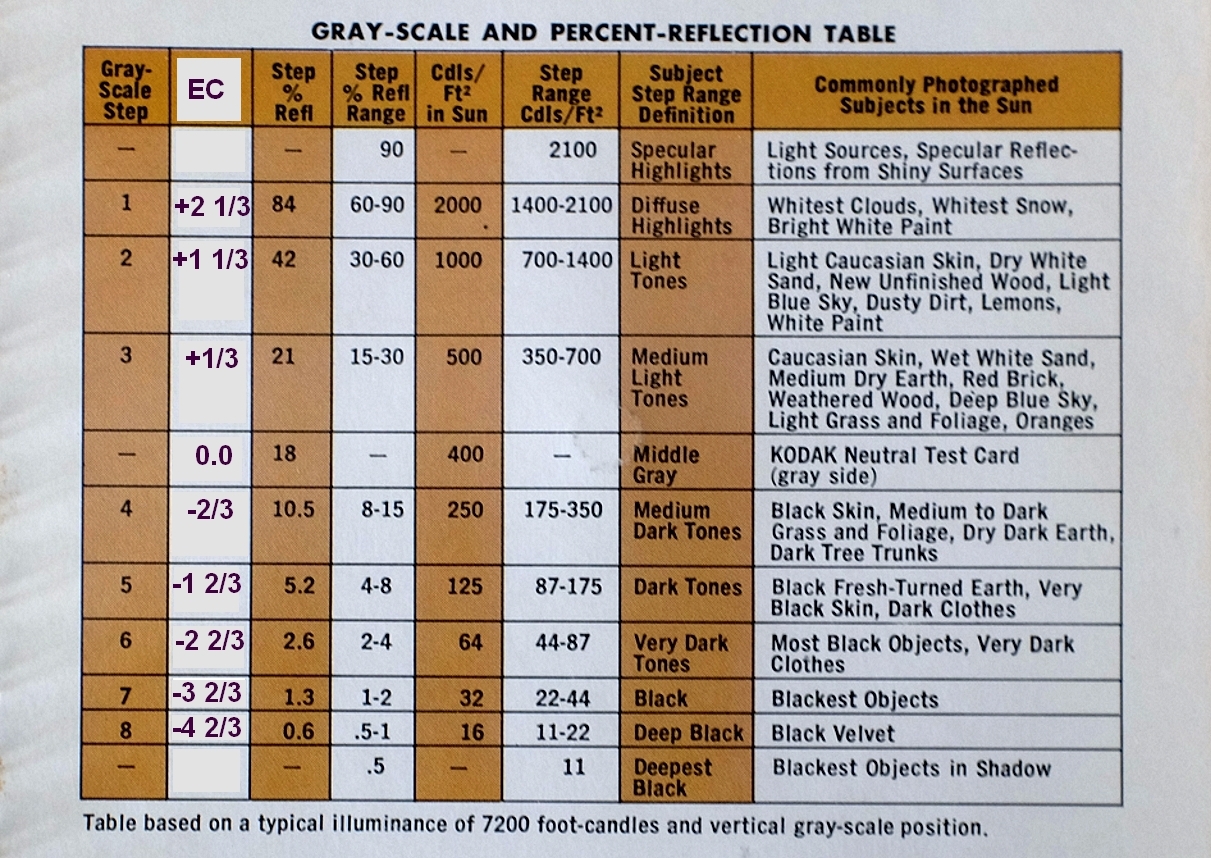
Come back, Ansel, all is forgiven ... even Kodak had it righter than some modern posters who think the camera should auto-do everything:
-

your starting to sound like a clone of Dunnomuch. open the raw files i linked . oh thats right your to embarrassed.
this might jolt your memory. -

Denying everything one doesn't understand is more common then we wish.
-

Jim, thank you for sharing the link to part 1 of your article. It was an interesting read, I like both the blackjack and raindrop analogies. I do have an observation and question about the raindrop analogy.
With the funnels positioned above the pixel buckets, it gives a visual impression of ISO as a pre-exposure setting. My understanding is that ISO is a post-exposure setting applied during processing of the data to render a JPEG.
My question is, if ISO is a post-exposure setting, would it be better illustrated as an element in the manipulation of the collected raindrops after the pixel bucket
I will admit to not having a good suggestion to offer on how to visually illustrate that. Of course, if I'm wrong about ISO being a post-exposure setting, it may be a moot point.
Thanks, again, for sharing the link. I'm looking forward to part 2.
-
Then color me paranoid ... LOL
-
Hinting to some conversation that never happened, again?
-
Usually, but not for all cameras at all ISOs, the ISO setting affects the gain applied before the raw file is written. Gain in this case is measured by the counts in the raw file divided by the number of electrons in the pixel. The dimensions of the gain at electrons^-1. So the funnel analogy works in general for ISO.
You could get picky and say that I've lumped together conversion gain and both analog and digital amplification with my funnels, and I'd agree with you. Like most analogies, this one falls apart if you push it too far.
The conversion of number of raindrops to millimeters of water in the bucket is reminiscent of conversion gain, which converts numbers of electrons to voltage.
Does that help?
-
From a pragmatic standpoint, you may want a JPEG light enough to allow for a review of the photo to assess focus accuracy, composition, rendering of movement in the frame, or other creative factors.
Another pragmatic consideration would be the protection of highlights balanced against the lightening of shadows to be done during processing. If your camera's invariant range begins at an ISO that's a good fit with your exposure settings, a benefit of working with that ISO is the latitude to protect highlights and lighten shadows significantly with confidence since the read noise associated with any usable higher ISO would be no better.
-
as i said you need a 21st century camera not a 19th.
just shot an image useing my zebras and they show more information as to what is blown in camera than your raw viewer 😂 your raw viewer shows a tiny hump, my camera show 4 hairline strips with zebras 😁 -
Try techsupport.
-
Actually, DSLRs newer than about 2013-15 and the modern crop of mirrorless bodies by Canon, Sony, Nikon and Fuji (representing the vast majority of all camera sales) are generally invariant starting somewhere in the ISO 400-800 range and continuing up to ISO 25600 or higher.
-
When doing landscape photography or shooting portraits with speedlights, I'll typically begin by dialing in the base ISO since I know I can use shutter speed (landscape) or scene brightness (portrait) to deliver a matching exposure taking full advantage of the dynamic range potential at base.
-
i dropped a bomb on the other thread and i will do the same here if i have to. with all the information to show who the moron is.
-
well what do you know "hi light inspection" shows the EXACT fine line blown highlights as my in camera zebras.
and look at the ovexp values .018 😄not accurate 😉